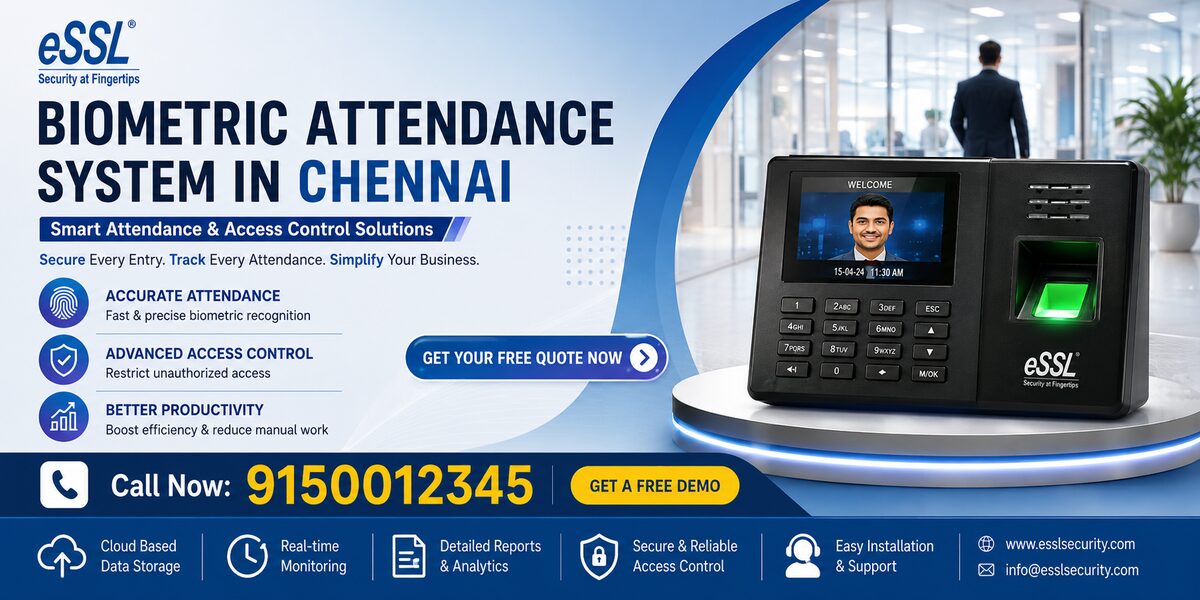
Biometric Attendance System: The Smart Way to Manage Employee Attendance
Biometric attendance system use advanced technologies such as fingerprints, facial recognition, and other unique identifiers to record employee attendance accurately and securely. Modern biometric attendance machines help businesses eliminate proxy attendance, reduce payroll errors, and improve workforce accountability. Cloud-based biometric attendance systems enable real-time attendance monitoring across multiple office locations, while face recognition attendance systems provide touchless authentication for better hygiene and convenience.
In addition, biometric attendance software can integrate seamlessly with payroll and HRMS platforms to automate workforce management processes. Before selecting a solution, businesses should evaluate factors such as scalability, integration capabilities, and security features. Today, fingerprint and face recognition attendance systems are widely used in offices, factories, schools, hospitals, and retail businesses to improve operational efficiency and workplace security.
Biometric Attendance System: Complete Guide for Modern Businesses
Most businesses already understand the importance of tracking employee attendance accurately, but many still rely on outdated systems that create payroll errors, proxy attendance, and administrative headaches. What many organizations overlook is how modern biometric attendance systems can automate workforce management while improving security and operational efficiency. In this guide, you’ll learn how biometric attendance systems work, their benefits, types, pricing, and how to choose the best biometric attendance solution for your business.
What Is a Biometric Attendance System?
A Biometric Attendance System is an employee attendance management solution that uses unique biological traits such as fingerprints, facial recognition, iris scans, or palm recognition to record attendance accurately.
Unlike traditional punch cards or manual registers, biometric systems verify employee identity using physical characteristics that cannot easily be duplicated or shared.
Modern biometric attendance systems commonly include:
- Fingerprint attendance systems
- Face recognition attendance systems
- Iris recognition systems
- Palm vein recognition systems
- Cloud-based attendance management platforms
These systems automatically store attendance records, generate reports, and integrate with payroll software to simplify workforce management.
Why Biometric Attendance Systems Matter for Businesses
Employee attendance directly impacts productivity, payroll accuracy, operational efficiency, and workplace discipline. Traditional attendance methods often lead to:
- Proxy attendance or buddy punching
- Manual calculation errors
- Payroll discrepancies
- Delayed attendance reporting
- Poor workforce visibility
A biometric attendance system solves these problems by automating attendance verification.
Key Benefits of Biometric Attendance Systems
1. Eliminates Buddy Punching
Biometric authentication ensures employees cannot mark attendance for others.
2. Improves Payroll Accuracy
Attendance data integrates directly with payroll software, reducing manual calculations and errors.
3. Saves Administrative Time
HR teams can automate attendance tracking, reporting, and shift management.
4. Enhances Workplace Security
Biometric attendance systems can integrate with door access control systems to restrict unauthorized entry.
5. Enables Real-Time Monitoring
Cloud-based biometric attendance systems allow management to monitor attendance across multiple locations instantly.
How Does a Biometric Attendance System Work?
Understanding how biometric attendance systems work helps businesses choose the right solution.
Step 1: Employee Enrollment
The employee’s biometric information is captured and securely stored in the system database.
Examples include:
- Fingerprint scans
- Facial templates
- Iris patterns
Step 2: Attendance Verification
When employees arrive, the biometric device scans their fingerprint or face and compares it with stored records.
Step 3: Authentication
If the biometric data matches successfully, attendance is recorded automatically.
Step 4: Data Synchronization
Attendance logs are synced with attendance management software or cloud servers.
Step 5: Reporting and Analytics
Managers can generate:
- Daily attendance reports
- Shift reports
- Overtime reports
- Late entry reports
- Payroll summaries
Types of Biometric Attendance Systems
Businesses can choose different types of biometric attendance systems depending on operational needs.
Fingerprint Attendance System
A Fingerprint Attendance System uses fingerprint scanning technology for employee verification.
Advantages
- Affordable
- Accurate
- Easy to deploy
- Widely used
Best For
- Offices
- Factories
- Warehouses
- Retail businesses
Face Recognition Attendance System
A Face Recognition Attendance System uses AI-powered facial authentication.
Advantages
- Contactless operation
- Fast recognition
- Improved hygiene
- Better user experience
Best For
- Corporate offices
- Hospitals
- Educational institutions
- High-traffic workplaces
Iris Recognition Attendance System
Iris recognition systems use eye-pattern authentication for high-security environments.
Advantages
- Extremely accurate
- Difficult to duplicate
- High security
Best For
- Government offices
- Research facilities
- Secure enterprise environments
Cloud-Based Biometric Attendance System
Cloud-enabled attendance systems store attendance records online for remote access.
Advantages
- Remote monitoring
- Multi-location management
- Real-time synchronization
- Mobile app support
Best For
- Multi-branch businesses
- Distributed teams
- Enterprises with remote operations
Key Features to Look for in a Biometric Attendance System
Choosing the right biometric attendance machine requires evaluating essential features.
Real-Time Attendance Tracking
Real-time attendance visibility improves workforce monitoring and operational planning.
Cloud Connectivity
Cloud integration enables centralized attendance management across locations.
Mobile App Integration
Modern attendance systems support:
- Mobile attendance monitoring
- Leave approvals
- Notifications
- Attendance analytics
Payroll Integration
Integration with payroll software reduces HR workload and minimizes errors.
Access Control Integration
Biometric attendance systems can work alongside:
- Door access control systems
- Smart locks
- Visitor management systems
Shift and Overtime Management
Advanced attendance software can automate:
- Shift scheduling
- Overtime calculations
- Holiday attendance tracking
Benefits of Using a Biometric Attendance System
Increased Productivity
Employees become more accountable when attendance tracking is automated and transparent.
Reduced Time Theft
Biometric verification prevents unauthorized attendance entries.
Better HR Efficiency
Automated reports reduce manual paperwork and administrative effort.
Improved Compliance
Accurate attendance logs help organizations maintain labor law compliance and audit readiness.
Enhanced Workplace Security
Integrated access control improves office and facility security.
Industries That Use Biometric Attendance Systems
Biometric attendance systems are widely adopted across industries.
Offices and IT Companies
Corporate organizations use biometric attendance systems for workforce management and security.
Manufacturing and Factories
Factories use biometric attendance machines for shift management and labor tracking.
Schools and Colleges
Educational institutions use biometric attendance systems for staff attendance monitoring.
Hospitals and Healthcare Facilities
Healthcare organizations prefer touchless face recognition systems for hygiene and operational efficiency.
Retail Stores and Warehouses
Retail businesses use biometric attendance systems to manage staff schedules and monitor attendance.
Biometric Attendance System Price and Cost Factors
The cost of a biometric attendance system depends on several factors.
Hardware Type
- Fingerprint attendance systems are usually more affordable.
- Face recognition attendance systems are comparatively premium.
Number of Employees
Larger organizations may require:
- Multiple devices
- Cloud servers
- Enterprise software licenses
Software Features
Advanced analytics, mobile apps, and payroll integration increase overall cost.
Installation and Maintenance
Businesses should also consider:
- AMC support
- Device servicing
- Software updates
How to Choose the Best Biometric Attendance System
Selecting the right biometric attendance solution requires careful evaluation.
Consider Your Workforce Size
Small businesses may only need standalone biometric machines, while enterprises require cloud-based systems.
Identify Security Requirements
High-security environments may benefit from:
- Face recognition
- Iris recognition
- Multi-factor authentication
Check Integration Capabilities
Ensure the system supports:
- Payroll integration
- HRMS integration
- Access control integration
Evaluate Scalability
Choose a solution that can support future business growth.
Compare Vendor Support
Reliable installation, technical support, and maintenance are critical.
Common Challenges in Biometric Attendance Systems
Fingerprint Recognition Issues
Dirty fingers, worn fingerprints, or improper scanning can affect accuracy.
Solution
Use high-quality optical or AI-powered scanners.
Privacy Concerns
Employees may worry about biometric data security.
Solution
Choose vendors that follow secure biometric encryption standards.
Internet Dependency
Cloud-based systems may require stable internet connectivity.
Solution
Use hybrid attendance systems with offline backup support.
Future Trends in Biometric Attendance Systems
The biometric attendance industry continues to evolve rapidly.
AI-Powered Face Recognition
Artificial intelligence improves recognition speed and accuracy.
Touchless Attendance Solutions
Post-pandemic workplaces increasingly prefer contactless biometric systems.
Mobile-Based Attendance
Smartphone-enabled biometric attendance solutions are becoming more common.
Cloud and Remote Workforce Management
Cloud attendance software enables hybrid and remote work monitoring.
Frequently Asked Questions About Biometric Attendance Systems
What Is the Main Purpose of a Biometric Attendance System?
The primary purpose is to automate employee attendance tracking while improving accuracy and security.
Which Is Better: Fingerprint or Face Recognition Attendance?
Fingerprint systems are cost-effective, while face recognition systems provide faster and touchless authentication.
Can Biometric Attendance Systems Integrate With Payroll Software?
Yes. Most modern biometric attendance systems support payroll and HRMS integration.
Are Biometric Attendance Systems Secure?
Yes. Advanced systems use encrypted biometric templates and secure authentication protocols.
How Much Does a Biometric Attendance System Cost?
Pricing varies based on features, user capacity, software integration, and deployment requirements.
Final Thoughts
A modern Biometric Attendance System is no longer just an attendance tracking tool. It has become an essential part of workforce automation, workplace security, and operational efficiency.
Whether you choose a fingerprint attendance system, face recognition attendance machine, or cloud-based attendance platform, the right solution can significantly improve productivity, eliminate attendance fraud, and simplify HR management.
Businesses that invest in smart biometric attendance solutions today are better prepared for the future of automated workforce management, remote monitoring, and intelligent workplace security.
🚀 Book Installation
Looking to install Biometric Attendance System in Chennai?
📞 Call / WhatsApp: 9150012345
Get a free consultation, demo, and best price today
Biometric Attendance Systems | Face Recognition Systems | Biometric Attendance Machine Price | Fingerprint Attendance Systems | Access Control Installation | RFID Access Control