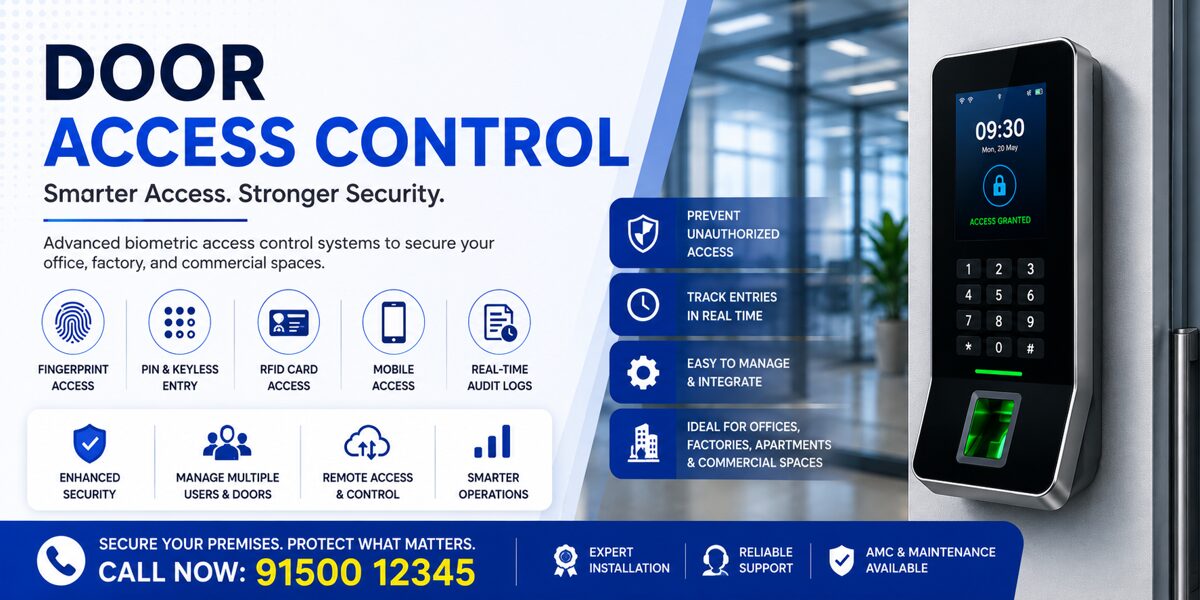
Door Access Control: Smarter Security for Modern Businesses
A modern door access control system is no longer a luxury for businesses — it is an essential part of workplace security and operational management. Imagine arriving at your office on a Monday morning only to discover that a former employee accessed your server room over the weekend using a duplicate key. No alerts. No entry records.
This silent security risk still exists in many offices, factories, warehouses, and commercial buildings across Chennai because they continue to rely on traditional lock-and-key systems.
For companies across Chennai — from IT parks in OMR to warehouses in Ambattur and manufacturing units in Sriperumbudur — access control is no longer optional. It has become an essential part of operational security and business management.
Why Traditional Locks Are No Longer Secure
Mechanical locks may seem simple and affordable, but they come with serious limitations that can expose businesses to major security risks.
No Record of Entry
Traditional keys provide no visibility into who entered a room or at what time. This becomes a compliance issue for industries such as IT, healthcare, finance, and manufacturing where audit trails are critical.
Easy Key Duplication
A duplicate key can be made in minutes at a minimal cost. Once an employee resigns or a contractor leaves, there is no reliable way to revoke access without replacing locks entirely.
Expensive Lock Replacement
If a key is lost, businesses often need to replace multiple locks across the facility — leading to unnecessary expense and downtime.
No Remote Access Management
Need to let a vendor or technician in after office hours? With conventional locks, someone must physically visit the site. Traditional systems simply cannot support remote access control.
Modern businesses require layered access permissions for employees, visitors, housekeeping staff, contractors, and management teams. Physical keys cannot provide this flexibility. Electronic access control systems can.
What Is a Door Access Control System?
A door access control system is an electronic security solution designed to allow or restrict entry based on authorised identity verification.
Instead of using physical keys, users gain access through credentials such as:
- Fingerprints
- Face recognition
- RFID cards
- PIN codes
- Mobile phones
- QR codes
A standard system consists of three key components:
Credential Reader
Installed at the entry point, this device scans fingerprints, cards, PINs, or facial data.
Access Controller
This acts as the system’s central processor, verifying credentials and deciding whether access should be granted.
Electronic Lock
Magnetic locks or electric strikes physically secure the door and respond automatically to the controller’s instructions.
Most modern systems also include cloud-based management software, allowing administrators to:
- Add or remove users instantly
- Set time-based access permissions
- Monitor live entry logs
- Unlock doors remotely
- Generate audit reports
All from a computer or smartphone.
Why Chennai Businesses Are Upgrading to Access Control
Businesses across Chennai are rapidly adopting electronic access systems due to growing security and compliance requirements.
Many corporate offices, IT parks, and industrial facilities now require digital access tracking to support:
- ISO 27001 compliance
- Visitor management protocols
- Fire safety standards
- Employee attendance integration
- Internal security policies
Access control systems also improve operational efficiency by reducing dependency on security personnel and manual key handling.
Types of Door Access Control Systems
Choosing the right system depends on your business size, security requirements, and operational needs.
1. Biometric Access Control Systems
Biometric systems use unique physical characteristics such as fingerprints or facial recognition to verify identity.
Best For:
- Server rooms
- HR departments
- Finance offices
- Restricted manufacturing zones
Advantages:
- Cannot be shared or duplicated
- Highly secure
- Accurate identity verification
2. RFID Card Access Systems
Employees use proximity cards or key fobs to gain entry.
Best For:
- General office entry
- High-traffic access points
- Staff attendance systems
Advantages:
- Fast and affordable
- Easy to issue and replace
- Scalable for large teams
Limitation:
Cards can be lost, shared, or cloned if not managed properly.
3. Keyless Mobile-Based Access
Mobile-based access control allows users to unlock doors through smartphone apps, Bluetooth, or QR codes.
Best For:
- Co-working spaces
- Smart offices
- Visitor management
- Flexible workplaces
Advantages:
- No physical cards required
- Temporary visitor access
- Remote management capability
4. Video Intercom Integrated Access
This combines access control with video verification, allowing security teams to visually confirm visitors before granting entry.
Best For:
- Residential apartments
- Corporate reception areas
- Gated communities
- Commercial complexes
Access Control Technology Comparison
| Technology | Security Level | Ideal Use | Approximate Cost |
|---|---|---|---|
| Fingerprint Biometric | High | Server rooms, HR, Finance | ₹8,000 – ₹25,000 per door |
| Face Recognition | Very High | Corporate offices, data centres | ₹20,000 – ₹60,000 per door |
| RFID Card System | Medium | General office access | ₹5,000 – ₹15,000 per door |
| PIN Keypad | Medium | Small offices, storage rooms | ₹3,000 – ₹10,000 per door |
| Mobile-Based Access | High | Co-working spaces, visitor access | ₹10,000 – ₹30,000 per door |
Prices vary depending on brand, installation complexity, and integration requirements in Chennai.
Common Mistakes Businesses Make When Buying Access Control Systems
Buying Hardware Without Centralised Software
A standalone fingerprint device is not a complete access control solution. Without software management, you lose monitoring and reporting capabilities.
Ignoring Future Expansion
Businesses often install single-door systems that cannot scale later. Always choose systems that support future growth.
Not Integrating with CCTV
When CCTV and access control work together, businesses gain visual evidence linked to entry events — greatly improving security investigations.
Forgetting Power Backup
Electronic locks behave differently during power failures. A properly designed system must include UPS or battery backup planning.
Choosing Vendors Without AMC Support
Electronic systems require regular maintenance. Working with a local Chennai vendor offering AMC support ensures faster service and reduced downtime.
How to Choose the Right Door Access Control System
Selecting the right system starts with understanding your facility and operational requirements.
Identify Critical Access Points
Separate high-security areas from common-access zones. Not every door requires the same security level.
Define User Roles
Employees, visitors, contractors, and housekeeping teams should each have different access permissions.
Prioritise Integration
Choose systems that integrate with:
- CCTV surveillance
- HR attendance software
- Fire alarm systems
- Visitor management platforms
Choose Cloud-Based Management
Cloud-enabled systems allow businesses to manage access remotely and respond instantly to security incidents.
Verify Local Support Availability
Reliable after-sales service is critical. Always work with a provider offering trained technicians and fast support response within Chennai.
Important Tip for Builders & Developers
If you are constructing a commercial complex, apartment, factory, or IT office, pre-planning access control infrastructure during construction can significantly reduce installation costs later.
Planning conduits and wiring pathways early can save up to 40% compared to retrofitting after completion.
Frequently Asked Questions
What is the cost of a door access control system in Chennai?
Basic RFID card systems typically start from ₹5,000–₹15,000 per door. Advanced biometric and cloud-managed systems for multi-door offices can range from ₹50,000 to ₹2,00,000 or more depending on features and scale.
What is the difference between biometric and RFID access systems?
Biometric systems verify identity using fingerprints or facial recognition, offering higher security because credentials cannot be shared. RFID systems use cards or tags, which are more affordable and suitable for large staff movement areas.
Can access control systems be managed remotely?
Yes. Most modern systems include mobile apps or cloud dashboards that allow administrators to manage users, unlock doors remotely, and monitor live access logs from anywhere.
Will the system work during power failures?
Yes — provided proper UPS or battery backup systems are installed. Lock behaviour during outages depends on whether fail-safe or fail-secure locking mechanisms are used.
How long does installation take?
Small office installations with 2–5 doors can usually be completed within 1–2 days. Larger integrated systems may take several days depending on wiring and software integration requirements.
Conclusion
Modern security requires more than locks and keys.
A professionally designed door access control system gives businesses complete visibility over movement inside their premises while improving operational efficiency and compliance readiness.
Whether you manage:
- A small office in Anna Nagar
- A warehouse in Ambattur
- A factory in Sriperumbudur
- A corporate office in Sholinganallur
There is an access control solution designed for your security requirements and budget.
The key is choosing the right technology, planning future scalability, and partnering with an experienced security solutions provider familiar with Chennai’s infrastructure and business environment.
Because when it comes to business security, prevention always costs less than a breach.
Secure Your Property Today
Looking to install Door Access Control Chennai?
📞 Call / WhatsApp: 9150012345
Get a free consultation, demo, and best price today.
Biometric Device | Biometric for Attendance | Biometric Machine| Attendance Biometric | Access Control Chennai | Door Access Control Systems | Biometric ESSL Chennai