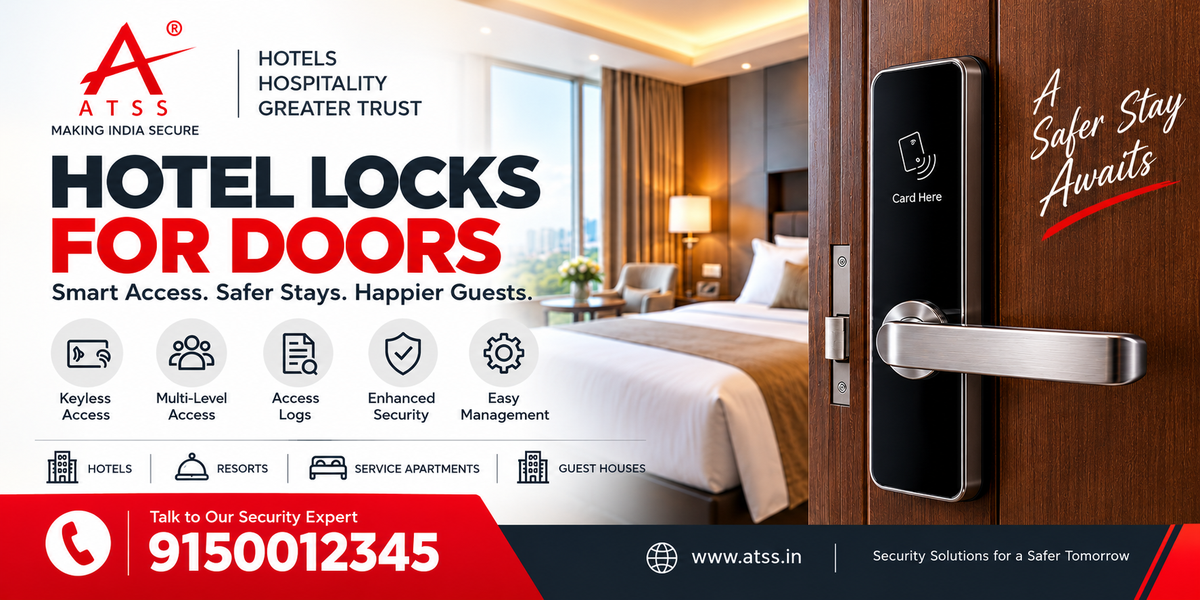
Hotel Locks for Doors: A Complete Guide for Hotel Security
When a guest closes the hotel locks for doors, they expect it to remain secure throughout their stay. At the same time, hotel management needs controlled access for guests, housekeeping staff, maintenance teams and administrators. A hotel room should give guests two things: comfort and confidence.
This is where choosing the right hotel locks for doors becomes important.
Traditional keys can work for small properties. However, modern hotels increasingly need electronic access control, audit trails, temporary access and better control over who can enter a room.
Whether you operate a small hotel, boutique property, serviced apartment or large hospitality facility, the right door-lock system can improve both security and guest experience.
Why Are Hotel Door Locks So Important?
A hotel door lock is more than a mechanism that opens and closes a door.
It is part of the property’s overall security system.
A good hotel locking solution should help address several requirements:
- Prevent unauthorised room entry
- Give guests convenient access
- Allow controlled staff access
- Reduce dependence on physical keys
- Make lost credentials easier to manage
- Improve operational control
- Support different levels of access
- Provide better accountability where required
For example, imagine a guest loses a traditional room key.
With a conventional system, management may need to replace the lock or issue a new physical key. With an electronic system, the old credential can potentially be cancelled and a new credential issued.
Therefore, the choice of lock affects not only security but also daily hotel operations.
Types of Hotel Locks for Doors
There is no single lock suitable for every hotel.
The appropriate solution depends on the property size, door type, budget, operating model and required level of security.
1. Traditional Key-Based Hotel Locks
Traditional mechanical locks are familiar and relatively simple.
They may be suitable for:
- Small hotels
- Budget accommodation
- Guest houses
- Low-room-count properties
Advantages
- Simple operation
- No electronic power requirement
- Lower initial technology investment
- Easy for basic applications
Limitations
- Physical keys can be lost or duplicated
- Managing many keys can become difficult
- Limited access tracking
- Changing access can require physical intervention
For a larger hotel, these limitations can become operational challenges.
2. RFID Hotel Door Locks
RFID-based locks are widely associated with modern hotel access systems.
Instead of using a traditional metal key, the guest can use an RFID card or credential to unlock the assigned room.
An RFID hotel lock can provide a more convenient experience while allowing hotel management to control credentials.
Benefits include:
- Keyless guest access
- Easy credential replacement
- Better access management
- Professional guest experience
- Integration possibilities with hotel systems
For many hotels, RFID locks provide a practical balance between convenience, security and cost.
3. Electronic Door Lock System for Hotels
An electronic door lock system for hotels can provide more than simply locking and unlocking a door.
Depending on the system architecture, hotel management may be able to manage:
- Guest credentials
- Staff credentials
- Access permissions
- Room access
- Entry records
- Temporary access
- Emergency access
This becomes especially useful as the number of rooms increases.
For example, a 20-room property may manage access manually without much difficulty. A 100-room or 200-room hotel needs a more structured access-control process.
Therefore, electronic locking becomes increasingly valuable as hotel operations grow.
4. Smart Door Lock for Hotel Applications
A smart door lock for hotel applications can use technologies such as:
- RFID
- Bluetooth
- Mobile credentials
- PIN codes
- Fingerprint authentication
- Network connectivity
The correct technology depends on the property’s requirements.
Smart locks can be particularly useful for modern hospitality concepts such as serviced apartments, premium residences and properties that want to provide more digital guest experiences.
However, “smart” should not automatically mean “better.”
The hotel should first identify its operational requirements and then select the technology.
Hotel Door Locks for Travelers: An Important Distinction
The phrase hotel door locks for travelers can refer to a completely different requirement.
A traveler may search for an additional security device to use inside a hotel room.
For example, a traveler may look for a portable door lock for hotel use because they want an additional layer of personal security while staying in unfamiliar accommodation.
These products are different from professionally installed hotel access-control locks.
Hotel management needs:
- Permanent door hardware
- Guest credential management
- Staff access control
- System administration
- Emergency access
- Maintenance support
Travelers may look for:
- Portable devices
- Temporary use
- Easy installation
- Compact design
- Compatibility with their accommodation door
Therefore, hotel owners should not confuse a portable travel lock with a commercial hotel access-control system.
Portable Door Lock for Hotel: Is It a Hotel Security System?
A portable door lock for hotel rooms is generally designed for individual travelers rather than hotel-wide security management.
It may provide an additional physical barrier depending on the door design and product compatibility.
However, it does not replace the hotel’s professionally installed locking system.
A hotel security strategy should include the complete door and access-control environment, including:
- Door hardware
- Electronic locks
- Access credentials
- Staff permissions
- Master access procedures
- Emergency access
- CCTV
- Alarm systems
- Security policies
Security works best as a system rather than as a single product.
Hotel Lock Comparison
| Lock Type | Typical Application | Guest Convenience | Access Management | Suitable For |
|---|---|---|---|---|
| Mechanical Key Lock | Basic properties | Medium | Low | Small hotels |
| RFID Lock | Hotels | High | High | Budget to premium hotels |
| Electronic Lock | Hotels & commercial properties | High | High | Growing hotels |
| Smart Lock | Modern hospitality | Very High | High | Premium/modern properties |
| Portable Lock | Individual travelers | High | Not applicable | Personal travel use |
The table should be treated as a general comparison. Actual capabilities depend on the specific lock and system configuration.
How to Choose the Right Hotel Lock
Before purchasing hotel locks, evaluate the following factors.
1. Number of Rooms
The number of rooms influences the complexity of access management.
A small property may require a simple standalone solution, while a large hotel may benefit from centrally managed access control.
2. Door Compatibility
Not every electronic lock fits every door.
Check:
- Door thickness
- Door material
- Existing lock configuration
- Mortise dimensions
- Door opening direction
- Fire-safety requirements
A site survey is recommended before finalising the hardware.
3. Access Technology
Consider whether you need:
- RFID cards
- PIN
- Mobile access
- Biometric authentication
- Bluetooth
- Network-based access
Choose based on actual operational requirements rather than technology trends.
4. Staff Access
Hotel staff may require different permissions from guests.
For example:
- Guest → Assigned room
- Housekeeping → Assigned rooms
- Maintenance → Selected areas
- Manager → Broader access
- Administrator → System-level access
A properly designed system should support appropriate access levels.
5. Emergency Access
Hotels must plan for situations such as:
- Lost guest credentials
- Electronic failure
- Battery failure
- Emergency evacuation
- Maintenance requirements
Emergency procedures should be defined before installation.
6. Battery and Power Management
Many electronic hotel locks use batteries.
Ask the supplier about:
- Battery life
- Low-battery warning
- Emergency power options
- Battery replacement procedure
- Maintenance requirements
Ignoring battery management can create avoidable operational problems.
Common Mistakes When Buying Hotel Door Locks
Mistake 1: Choosing Only Based on Price
The cheapest lock may not provide the operational features required by the hotel.
Instead, evaluate the total cost of ownership, including installation, software, cards, maintenance and future replacement.
Mistake 2: Ignoring Door Compatibility
A lock that looks suitable online may not fit the existing door.
Always verify the door specifications before ordering.
Mistake 3: Not Planning Staff Access
Guest access is only one part of hotel security.
Housekeeping, maintenance and management also require controlled access.
Mistake 4: No Emergency Procedure
Every electronic locking system should have a documented emergency-access procedure.
Mistake 5: Treating the Lock as the Entire Security System
A hotel lock protects a door.
A complete hotel security strategy may also require CCTV, access control, intrusion alarms, visitor management and appropriate security procedures.
Hotel Door Lock Security Should Be Part of a Larger Strategy
A hotel can have a high-quality electronic lock and still have security weaknesses elsewhere.
Consider integrating door security with other systems where appropriate.
CCTV
Cameras can help monitor:
- Entrances
- Reception
- Corridors
- Parking areas
- Service entrances
- Common areas
Access Control
Access control can manage staff and restricted-area access.
Intrusion Alarm
Alarm systems can help protect areas that require additional security after business hours.
Visitor Management
Visitor management can provide better control over contractors, vendors and other non-guest visitors.
The objective is not to install the maximum number of technologies.
The objective is to create an appropriate security architecture for the property.
What Is the Best Hotel Lock?
There is no universal “best” hotel lock.
The right choice depends on:
- Property size
- Hotel category
- Door type
- Budget
- Guest profile
- Staff requirements
- Access-control requirements
- Existing security infrastructure
- Future expansion plans
For many modern hotels, an electronic or RFID-based locking solution can provide a practical combination of convenience and access management.
However, the final selection should follow a site assessment and technical evaluation.
Why Professional Hotel Lock Installation Matters
Hotel locks are security hardware, but installation quality is equally important.
Professional deployment should consider:
- Door and frame condition
- Lock compatibility
- Credential management
- Staff access levels
- Emergency procedures
- Battery maintenance
- System administration
- Future expansion
- Integration with other security systems
A security solution provider can assess these requirements and recommend an architecture instead of simply selling a lock.
This approach helps the hotel invest in an overall security outcome rather than an isolated product.
Frequently Asked Questions About Hotel Locks for Doors
1. What are hotel locks for doors?
Hotel locks for doors are locking systems specifically used to secure guest rooms and other hotel areas. They can include mechanical, RFID, electronic and smart locking technologies.
2. What is an electronic door lock system for hotels?
An electronic door lock system for hotels uses electronic credentials such as RFID cards, mobile credentials, PINs or other authentication methods instead of relying only on traditional keys.
3. Are smart door locks suitable for hotels?
Smart door locks can be suitable for hotels when their features match the property’s operational and security requirements. Compatibility, access management, emergency access and maintenance should be evaluated before installation.
4. What is a portable door lock for hotel rooms?
A portable door lock for hotel rooms is generally a personal security device intended for travelers. It is designed for temporary use and does not replace a professionally installed hotel access-control system.
5. How do I choose a hotel door lock?
Start by evaluating the number of rooms, door type, required access technology, guest and staff access requirements, emergency procedures, budget and integration requirements. A professional site assessment can help determine the appropriate solution.
Conclusion
Choosing hotel locks for doors is not simply about finding a lock that opens and closes securely.
The right solution should balance guest convenience, security, access management, reliability and operational efficiency.
For small properties, traditional locks may still be practical. For modern hotels, RFID and electronic locking systems can provide stronger access-management capabilities. Smart locking technologies may offer additional convenience where the infrastructure and operating model justify them.
At the same time, hotel door locks should be considered as one component of a broader security strategy that may include CCTV, access control, alarms and visitor management.
📞 Call ATSS Today
Looking to install hotel locks for doors chennai?
Call / WhatsApp: 9150012345
🌐 www.atss.in
Get a free demo, expert consultation, and best price today.
Face Recognition Attendance System | Biometric Machine For Attendance | ESSL MB160 Biometric Attendance | Fingerprint Scanner Door Lock | Biometric Solutions | Fingerprint Reader Door Lock